
Center for Agriculture and the Economy
Leveraging expertise from the Kansas City Fed, the Center provides timely analysis of industry developments and conducts ongoing research on the agricultural economy.
Long-term Farmland Appreciation May Remain Attractive to Some Buyers
By Ty Kreitman
August 27, 2026
U.S. farmland real estate values have stayed strong despite tightening in farm financial conditions. While the expected return on farmland from cash rents has declined as land values have outpaced increases in rental rates, long-term appreciation has remained relatively steady. The capitalization rate on nonirrigated cropland dropped slightly below the 10-year moving average yield on 10-year U.S. bonds in the second quarter of 2026 (dark blue and purple lines). However, the 10-year moving average of annual appreciation in land values (green line) remained more than 1.25 percentage points higher. Over the past decade, average land appreciation has also exceeded average yields on inflation adjusted 10-year bonds by about 3.5 percentage points (light blue line). Farmers have remained the primary buyers of land in most major agricultural regions and the long-term prospects have potentially remained attractive when considering inflation and alternative investments.
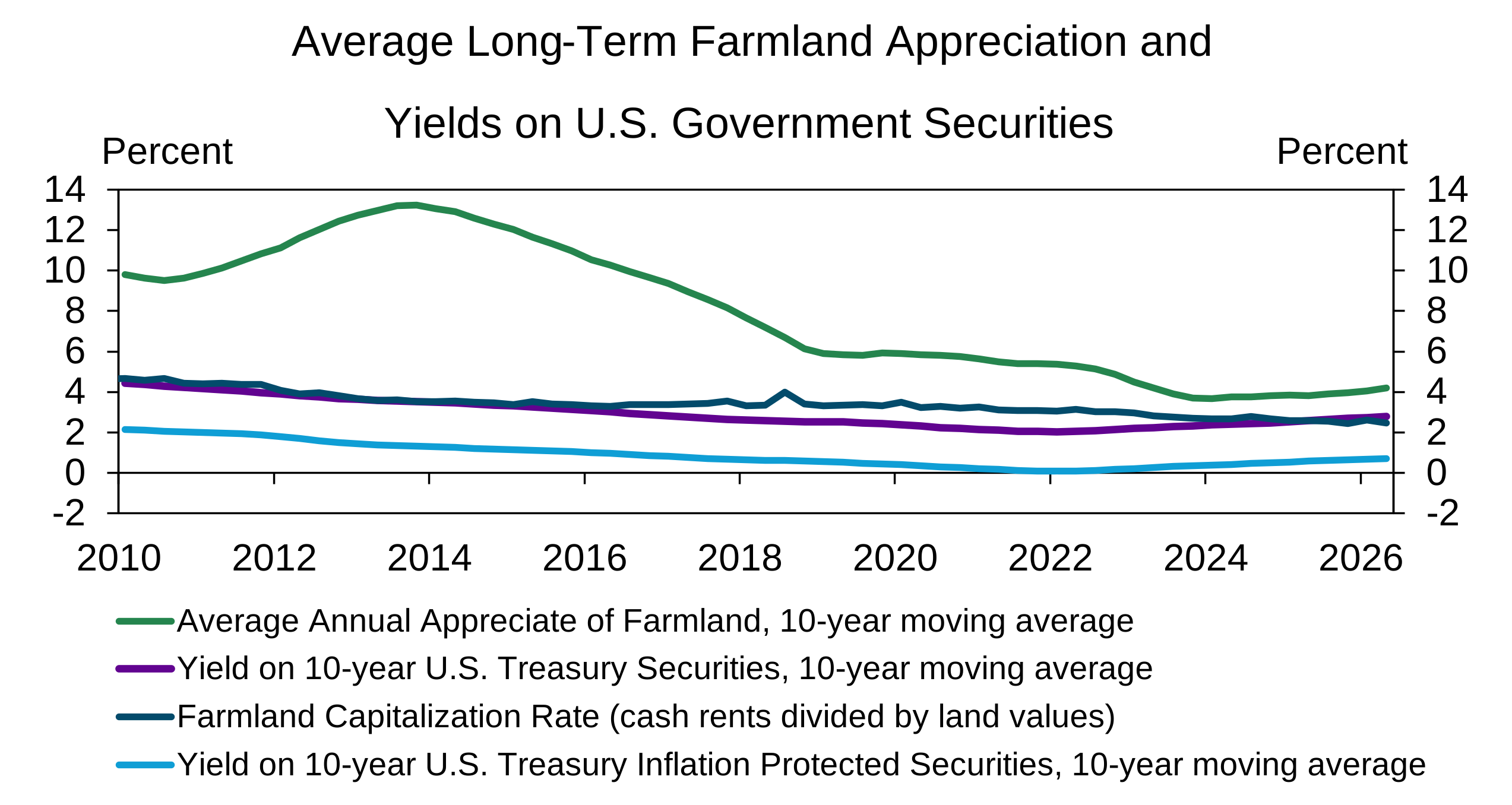
Note: The capitalization rate is calculated as cash rent on nonirrigated cropland divided by the value of nonirrigated cropland. The appreciation of farmland values is based on annual changes in the value of nonirrigated cropland.
Sources: Federal Reserve Survey of Agricultural Credit Conditions, Federal Reserve Board of Governors; Federal Reserve Bank of Kansas City staff calculations
Find additional Insights on Agricultural and Rural Economies.
Research and Information
Agricultural Finance
Research and articles tracking trends in agricultural finance.
Insights on Ag and Rural Economies
Concise analysis on agricultural and rural economic trends.

Agricultural Data and Indicators
Data on economic and financial conditions in agriculture.
Agriculture Research Hub
All of the Kansas City Fed's research and resources on agriculture and related topics.
System Resources
Links to research and resources on agriculture and rural topics from throughout the Federal Reserve System.
Latest Research and Updates

-
Farm Finance Deterioration Eases Slightly | -
Steady Tightening of Agricultural Credit Conditions Persists | -
High Costs and Uncertainty Will Likely Keep Cattle Inventories Low and Beef Prices Elevated for Some Time | -
Center for Agriculture and the Economy at the Federal Reserve Bank of Kansas City Launches Agricultural Advisory Council | -
Agriculture, the Economy, and the Kansas City Fed | -
New Farm Loan Originations Ease Slightly |
-
Farm Finance Deterioration Eases Slightly | -
Steady Tightening of Agricultural Credit Conditions Persists | -
New Farm Loan Originations Ease Slightly | -
Farm Loan Growth Remains Strong as Lending Shifts at Some Large Banks | -
Continued Resilience in Farmland Values | -
Sharp Growth in Tenth District Ranchland Values |
- Update on U.S. Economy and Agriculture |
-
Agriculture, the Economy, and the Kansas City Fed | - Economic Update on the U.S. Farm Economy |
- Update on Agricultural Credit Conditions |
- Agricultural Economic and Financial Outlook |
- An Update on Agriculture and the Economy - AgExcellence Nashville |
The Kansas City Fed's Continuing Commitment to Agriculture
Through regular surveys, analysis and connections across the industry, the Kansas City Fed has had a longstanding focus on U.S. and global agriculture. Leveraging this expertise, the Center for Agriculture and the Economy serves as a resource within the Federal Reserve System by providing timely analysis of industry developments and conducting ongoing research on the agricultural economy. The Kansas City Fed is committed to understanding developments in the agricultural economy and gathering perspectives from rural America in order to include them in discussions on the national economy.
The Kansas City Fed's Ag Connection
Agriculture is central to the Kansas City Fed’s 10th District’s economy, from farm production and food manufacturing to agricultural banking and finance. Through its regular surveys, analysis and connections across the industry, the Kansas City Fed has had a longstanding focus on the U.S. and global agricultural economy. At the same time, connecting with stakeholders and ag industry professionals through events, round tables and conversations is critical to the Bank’s work.